May Issue

Updated: May 9
Editor's Note
Welcome to The Scuttle’s final issue of the 2025-2026 academic year!
An entire school year since editors Josephine (Josie) Fahey and myself first joined The Scuttle is about to come to pass. While I will not be returning to Cabrillo College in the fall, I wish to convey that it has truly been such an honor and enriching experience to write for and co-lead this publication.
The Scuttle team has some exciting news to share regarding our May Issue. This month’s publication will be released in two parts: the usual, digital one that you are reading now and a special print edition coming in a couple of weeks! We are so excited to be able to share a physical version of our work with the Cabrillo community. The print edition will contain many of the articles from the digital version, as well as some new ones from Josie and I. This is also a good time to remind our readers that we are always accepting writing and art submissions from students via this form. Submit by Wednesday, May 6 to have your work included in the print edition!
In the digital issue you will find a piece on Cabrillo’s celebration of Middle Eastern Heritage, updates on Student Senate elections, an article on the recent changes to Cabrillo’s Promise Program, and new columns from Lizzy Sterling and Rocco Arnott in “The Scene” and “Whereabouts.”
Thank you for your continued support of The Scuttle and student journalism!
–Isabella Blevins
Upcoming Events
Cabrillo Escucha
Students, you are invited to gather for a plática with Dr. Blanca Baltazar-Sabbah, Vice President of Student Services and Cabrillo Alumna! Come as you are. Your story matters. This is an opportunity to share your experiences, feel heard, and connect in a
genuine way-helping shape a campus community rooted in care, belonging, and trust.
Dates, Times, & Locations:
At the Aptos Multicultural Student Center: May 5, 1-2 pm
At the Watsonville Center: May 6, 1-2 pm
Student Mental Health Conference
Student Health Services is hosting their annual Mental Health Conference on Wednesday, May 6th from 5:30-7:30 pm in Watsonville room A160
and Thursday, May 7th 11 am-3 pm in Aptos in HORT 5005. The conference will feature a sound bath, yoga, and open dialogue forums for students to engage in conversation about healing, health, and wellbeing. Register for this event on their webpage.
Xinachtli Journal (Journal X) Celebration
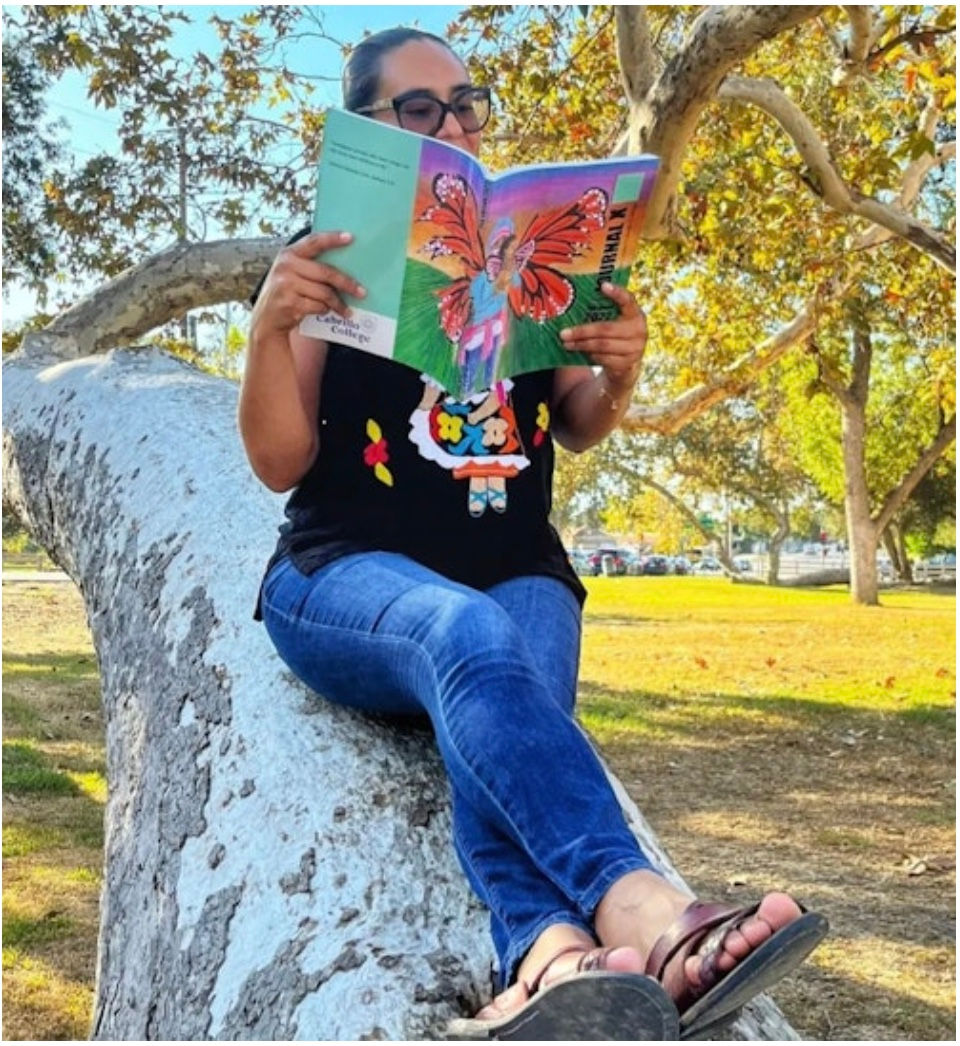
Every spring, Cabrillo students put together the social justice and literary arts magazine, Journal X. On May 1st, from 6:00-8:00pm, in the Watsonville Campus Multi-Purpose Room, join the production class in a celebration of the sixth edition of the journal with author readings, art displays, a short film screening, and food!
MSC Boba Event, Clothing Swap, and Film Screening
On May 4 and 5 from 1-3pm, head down to the Multicultural Student Center for a free boba and clothing swap event hosted by the SACNAC club and MSC staff. On the same days, a Hunger Games film screening will be playing continuously from 12-5pm. Light refreshments provided!
Porter Gulch Review Literary Journal Celebration
Celebrate the 41st edition of Cabrillo’s literary arts journal on May 13 at 7pm in Horticulture Room 5005. Enjoy an evening of spoken word and art featured in this years PGR. Celebrate student and community contributions with music, food, and live performances!
Decolonizing Surfing Event - an International Workers Day Beach Party
On Friday May 1, from 9am-12pm, at Manresa Beach, the Division of Student Equity and Success is hosting a beach party! Learn about the history of surfing and how to surf, and celebrate international workers day with food, sun, and waves!
Announcements
Cabrillo Graduation Dates and Deadlines
Planning to graduate this spring? Keep track of these key dates:
May 8 at 3PM | Gown Loan Program Deadline
May 15 at 5PM | Graduation Ceremony RSVP Deadline
May 15 at 3PM | Request for Accommodations Deadline
May 19 from 10AM-2:30 PM | Grad Fair at Watsonville Center
May 20 from 10AM-2:30PM | Grad Fair at Aptos Campus
May 22 at 4PM | Graduation Ceremony
For more information, visit the Graduation Prep Page

Call for Student Representatives for the MSC Art Student Art Committee
The Multicultural Student Center is looking for students to serve on a Student Art Committee, dedicated to finding artwork to hang in the MSC that represents the interests of the students in the Cabrillo community. The committee will meet throughout the summer so that final decisions can be put into motion in the fall semester. Interested students can contact Maleah Benjamin at mabenjam@cabrillo.edu, or scan the QR code for more information.
Finals Week
Finals week is May 18th-24th! Be sure to check your finals schedule here.
Cabrillo College To Cease Guaranteed Two-Year Tuition Coverage for New Students
Recent changes to state funding for community colleges have restricted student eligibility for Cabrillo College’s Promise Grant, making financial aid at Cabrillo less accessible than before.
Every year, numerous local high school seniors choose Cabrillo College over universities or other community colleges because of the grant, which pledges to cover two full years of tuition, greatly reducing–if not eliminating–out-of-pocket costs.
The Promise Program was established in 2018. However, due to the slew of financial challenges confronting the college, the program as it has been known is coming to an end. On April 2, an announcement and a student-facing flyer were sent out to college employees detailing the changes to the program.
Under the old requirements, all first-time Cabrillo students were eligible to receive the grant for two full years as long as they attended full-time, graduated from a high school within the college’s district, and remained in good academic standing.
Now, eligibility for the Cabrillo Promise Program will be determined by whether a student qualifies for the California College Promise Grant (CCPG) which is determined by a student’s financial information reported in their Free Application for Federal Student Aid (FAFSA) or the California Dream Act Application (CADAA).
There are now two methods by which a Cabrillo student can qualify for the Promise Grant. The first method states they must be a recipient or a dependent of a recipient of one of the following: TANF/CalWORKS, SSI/SSP, General Assistance; dependent’s fee waiver from the Veteran’s Affairs Dept.; dependent’s fee waiver from the National Guard Adjutant; Congressional Medal of Honor, or 9-11 Dependent; or a dependent of a deceased law enforcement/fire suppression personnel killed in the line of duty. The second method stipulates that the student’s household must meet the 2023 income guidelines, which can be viewed here.

“This change allows the college to prioritize limited funds for low-income and first-generation students. As a result, some students who previously qualified may no longer automatically receive free tuition,” explained Blanca Baltazar-Sabbah, Vice President of Student Services.
Eduardo Lopez-Duran, 21, a Cabrillo student who will graduate this spring, expressed concern about the college’s decision to limit Promise Grant disbursal.
He said the grant is “essentially what gave me the push to pursue a higher education. It was just enough of a head start to now have the opportunity of entering [a] UC which I never would’ve imagined for myself.” He added, “It makes me question and worried that it's only just the beginning of a decline in student aid overall.”
Financial Aid Director Tootie Olsen explained that students currently receiving the Promise Grant for the first time during the 2025-2026 academic year will be given the grant for one more year, as long as they continue to meet the previously set program requirements. In other words, they can still receive the full two years of the Promise Grant, despite the recent change to the eligibility standards.
The college has also struggled recently with low enrollment, a problem that has the power to further diminish state funding for education. If fewer Cabrillo students receive the two-year Promise Grant, the situation could further impact the college’s enrollment.
Several nearby community colleges are also reevaluating how they can financially support their students in the wake of state funding challenges.
Foothill College in Los Altos Hills covers one full year with the possibility of covering a second year. However, beginning in fall 2025, grant eligibility is under review for new, first-time students.
Beginning this fall, first-time students at De Anza College can receive a free first year of tuition with the potential of a second year of coverage.
As of now, promise programs at Monterey Peninsula College, Hartnell College in Salinas, and Gavilan College in Gilroy continue to cover full-time student tuition for first-time students for two full years.
If other nearby community colleges continue to offer two years of free tuition, it could make those schools more enticing to incoming first-time college students.
–Isabella Blevins
Faculty undergo ICE response training; students question if it’s enough
In 2025, Immigration and Customs Enforcement (ICE) significantly increased their detention enforcements through targeted attacks, stakeouts, and violence. Many have doubted the legality of ICE’s strategies and have felt unsafe going to public places, like school and work. In December, when ICE activity was at a climax, a Santa Barbara City College parking lot was used as a staging ground for their next action at a nearby neighborhood.
In response to student safety concerns, Cabrillo College faculty Dr. Ginger Charles, Watsonville Education Center Manager Olga Diaz, and HR Director Angela Hoyt, in coordination with Lawyer Arturo Ocampo, created ICE Response trainings to prepare Cabrillo faculty in the event of ICE arriving on campus. Because of recent events, students on campus are increasingly worried about their safety.

Following a campaign promise to increase deportation rates in his 2024-2028 presidential term, President Donald Trump’s “One Big Beautiful Bill” included a $170 billion budget increase for the Department of Homeland Security and related operations. Since, ICE activity has increased nation-wide, most significantly in Texas, Florida, and California in 2026.
According to the Deportation Data Project, in 2025, interior deportation increased 5x, while street arrests increased 11x.
“At its peak in December, ICE was arresting over 800 people a day on the streets of American communities,” says the American Immigration Council.
Increased ICE activity has since discouraged targeted demographics from going to work and school. Anahi Mendoza-Hernandez, 18, a student at Cabrillo, shares how it's affected those close to her.
“My mom has a lot of undocumented friends… She hasn’t been affected so far. Hopefully never. But a lot of her coworkers are getting taken, so a lot of people are not going to work because of personal issues with that,” said Mendoza-Hernandez.
On December 11, when ICE and FBI vehicles were spotted in a Santa Barbara City College parking lot Santa Barbara City college officials said that no students were arrested. The local news outlet, The Santa Barbara Independent, reported that students were huddled in the library for an hour before an alert was sent out confirming the federal officers had left campus.
This is the first and only instance of ICE presence on a California community college campus, as of April 2026, but students everywhere are worried.
Community colleges are an essential economic resource for undocumented individuals. Cabrillo’s accessibility programs like Dream Resources, and Deferred Action for Childhood Arrivals (DACA) Support, allow undocumented individuals to pursue higher education. What was once a safe place for undocumented students can now be weaponized as a target zone for federal ICE agents. According to an article in Lookout Santa Cruz, undocumented student applications for federal financial aid have decreased by 18% at Cabrillo since 2024.
Mia Reyes Gonzalez, 19, a Biology major at Cabrillo shares how increasingly apprehensive she is about ICE activity at schools. She said Watsonville has always felt “protected” to her, until recently.
Gonzalez said, “I feel so sad that you come here because you're promised these opportunities, and when people come to college to get an education and actually utilize that, they say ‘no you’re wrong, we’re going to use your campus to target you.’”
Faculty express similar sentiments. Dr. Ginger Charles, the Department Chair and Faculty of Criminal Justice Department at Cabrillo says she is “...sickened with what’s going on with ICE.”
Following concerns about student safety on campus Dr. Charles and Olga Diaz created a subcommittee of the Safety Committee to ensure faculty are equipped with a legal understanding of what to do when interacting with ICE. In March, the subcommittee team recruited Arturo Ocampo, a lawyer who specializes in civil and discrimination law and diversity, equity, and inclusion to present to faculty. By April the trainings were in full swing.
Ocampo said these training sessions will “hopefully mitigate the harm to students and personnel that work here.”
During the training, faculty and staff learned what ICE activities are legally prohibited, classroom protocol, administrative protocol, and detainment protocols.
If federal ICE agents are seen on campus, follow the protocol detailed in the flyer to the left. Remember, you have the right to remain silent. ICE can only make a detainment if they have a judicial or administrative warrant, reasonable suspicion, or probable cause. If ICE approaches someone with intent to detain, ICE is legally bound to show the warrant to the detainee if requested. Be sure to look for any informational mistakes, such as misspelling or incorrect name or address, thus rendering the warrant invalid. If the ICE officer does not have a warrant, it is crucial that faculty, staff and students refrain from acting in a way that grants reasonable suspicion or probable cause. This includes, hardboring or hiding individuals, and running from or resisting federal agents. Additionally, federal ICE agents are not allowed to enter non-public places such as in-session classrooms or private offices or access confidential information without a judicial warrant.
A large conversation point among staff and faculty was concern about protocol efficacy in instances when ICE is acting outside of law prohibitions. One staff member asked, “As we’ve seen in the news, [ICE is] not always the friendliest. So what steps should we take if somebody does get unlawfully taken?”

Training leaders Ocampo, Charles, and Hoyt explained that the college can only give legally reasonable advice. They answered that the college recognizes the likelihood of federal enforcement interactions dangerously escalating, but are only authorized to give advice under legal parameters that may retroactively benefit an individual's release.
Ocampo says, “I wish I could tell you more, but the best we can do is mitigate harm to ourselves and to students.”
In an interview, Ocampo affirmed that ICE is "ignoring the requirements of the Constitution. You know, if we can't count on our law enforcement to do the right thing, then what are we going to do?”
Cabrillo students Mendoza-Hernandez and Gonzalez said, they have seen posters and “Know Your Rights” cards on desks. But while faculty get training, is that enough for students?
Dr. Charles said, “The next step is we’ve got to let our students know.”
–Josephine Fahey

A Mosaic of Voices: Celebrating Arab American Heritage Month
On April 28, Cabrillo celebrated Arab American Heritage Month and the local Middle Eastern diaspora with spoken word poetry from local poets, live music performances and history lessons on Arabic influences on the Spanish Language.
Geneffa Jahan, an English professor at Cabrillo since 2000, said, “For years I have felt called to uplift the voices and experiences of Middle Eastern students at Cabrillo.”
Jahan’s ancestry comes from the ethnic group Gujarat from northern India, with traces of Persian, Pakistani, and Afghan. She says she has always been what she calls a “micro-minority”, or a minority within a minority. As a Khoja-Ismaili Muslim, she makes great efforts to maintain a deep connection to her culture and religion with her two daughters, making regular two-hour drives to Milpitas, their closest cultural hub to Santa Cruz.
For many students and families in Santa Cruz county, finding cultural connections is difficult. Unlike larger metropolitan areas, Santa Cruz has smaller ethnic diasporas, making ethnic and culturally-based community harder to achieve. Local micro-minority students often grow up without seeing cultural displays of their identities through food, art, clothing, music, and hair. At school, representative curriculum, events, and leadership are also hard to find. This absence can create a sense of invisibility, especially for students who already feel caught between multiple identities.
As a Cabrillo faculty member for 26 years, Jahan voiced some of the tribulations of representing a micr0-miority group at Cabrillo. She shared that when President Trump was elected to his first term in 2016, she had a number of Iranian and Syrian students who were “petrified”. Jahan even recalls a time in 2017 when a student was called slurs as her hijab was pulled off her head in her science lab.
“I remember one of them crying to me, saying how scared they were to be here and feeling like Cabrillo didn’t see them.”
When asking Cabrillo Administration what events or community Cabrillo can create for these students, Jahan was met with questions like, “Do we have any [of these students]?” This reluctance to support students reflects how easily cultural communities are dismissed simply because of a small headcount. Regardless, Jahan pioneered Cabrillo’s Selam Initiative, where students, staff and faculty came together to host events, educate, and create a community for themselves. But due to fluctuating enrollment rates of participating students the initiative disbanded.
Moving forward from these experiences, Cabrillo celebrated Arab American History month in the Multicultural Student Center this April with a diverse display of Middle Eastern voices, food and music. Jahan kicked off the event with a moving anecdote, highlighting the shift of negative attention towards the Middle Eastern community in America after the 9/11 terrorist attacks. Since then, the ethnic community has felt and experienced higher amounts of discrimination and racism. With the raging war and political conflict happening all over the Middle East, the event served as “a cultural celebration of our differences.”
The celebration demonstrated the importance of creating spaces where student identity can be affirmed and celebrated. The event centered the unity of cultures through storytelling, art, spoken word and shared humanity.
Poetry performances by Persis Karim, Elbina Rafizadeh, and Madeline Aliah characterized the event. Many speakers had overlapping themes of war, cultural identity and affinity, and food. Cabrillo faculty, Francisco Iniguez presented on the Arabic derivations of the Spanish language, tying the two cultures together. Most notably drawing the connection between the spanish word, Ojalá, meaning “I hope” as derived from insha'Allah, meaning “God willing.” Local Israeli musician Dror Sinai, closed off the ceremony with vibrant musical compositions backed with vocals in the Hebrew and Arabic languages.
This event, and others like it, allow students to see themselves as understood and valued on campus. The intentional outreach done by Jahan and the Multicultural Student Center staff created a sense of belonging and solidarity among the Cabrillo community.
Karim in her time speaking said, "I think it's really important that we not silo our identities but rather see the possibility of connection and solidarity.”
–Josephine Fahey
Ways to Count the Dead
“Keeping track of the Iraqi death toll isn’t the job of the United States,”
a student said,“and besides, how would we count the dead?”
Take their limbs strewn about the streets—
multiply by a thousand and one.
Ask everyone in Baghdad who has lost
a brother. Cousin. Sister. Child—to speak
their name in a recorder.
Go to every school, stand
at the front of the class, take roll;
for every empty desk, at least two dead.
Find every shop that sells cigarettes—
ask how many more cartons they’ve sold this year.
Go to the bus station and buy ten tickets—
offer them free to anyone who wants to leave.
Go see the coffin-maker. Ask how much
cedar and pine he’s ordered this month.
The dead don’t require much. They don’t speak
in numbers or tongues, they lie silent
waiting—to be counted.
–Persis Karim
Student Senate 2026-2027 Candidate Statements
The following candidate statements are from students who have been verified to run for the 2026-2027 academic year. According to George Little, ASCC Senator-at-Large and Elections Committee Chair, the committee has spoken to several students who are interested in joining the Senate but prefer to self-nominate for remaining open positions at the beginning of the 2026 fall semester.
Student Trustee Candidate:
Josephine Fahey
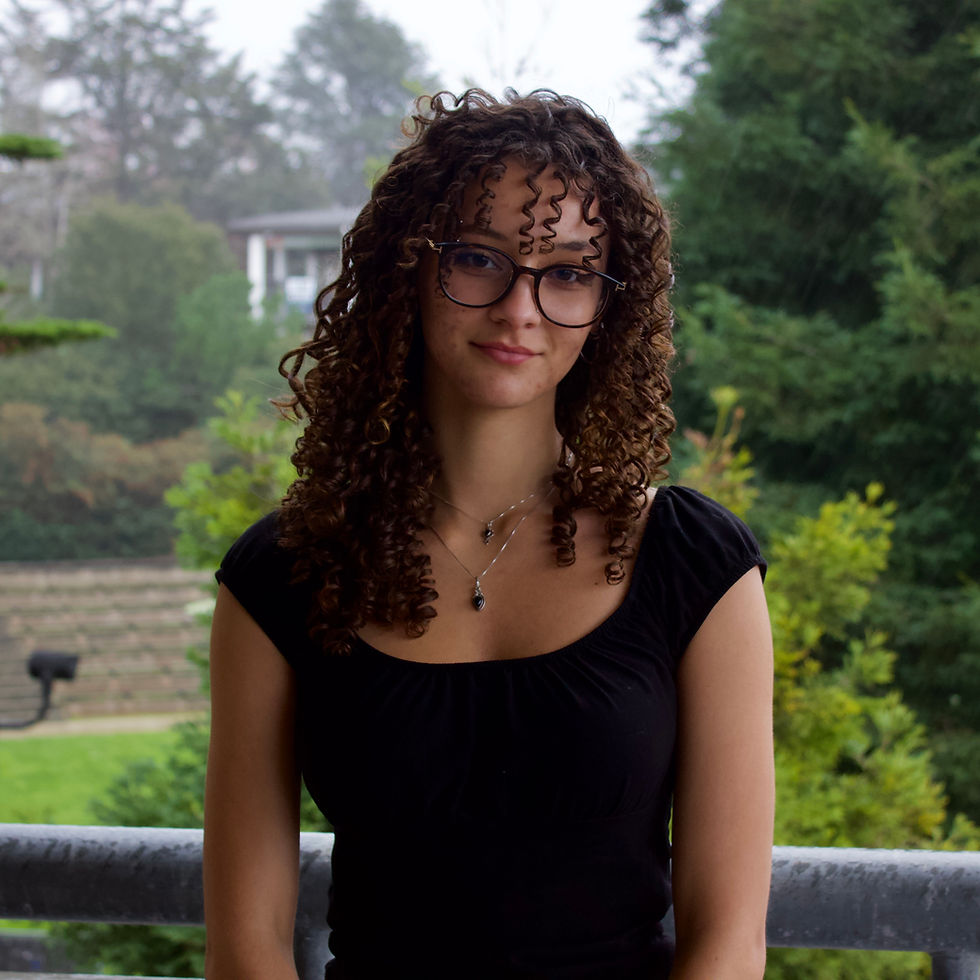
“As your Student Trustee Representative, I aim to use my position to strengthen the connection between students and the executive functions of the college, increase the visibility of the campus diversity through events and curriculum, and continue to advocate for equitable, accessible, quality education in the midst of political uncertainty. Through my work as a journalist for Cabrillo’s student-led news publication, The Scuttle, I have dedicated hours listening to students, learning about our campus, and connecting with constituents to create a community of awareness and inclusion. Applying my knowledge of administrative functions, I want to expand equity programs, and diversify our course listing and curriculum to improve student success and persistence, specifically among minoritized, dual enrolled, and returning students. Furthermore, I wish to give students peace of mind, knowing their student representative is continuously advocating for their right to higher education during economic and political uncertainty. Vote Josie for Trustee.”
Fahey currently serves as ASCC Student Trustee. She was elected to the position in March.
Treasurer Candidate:
Alesha Wootten
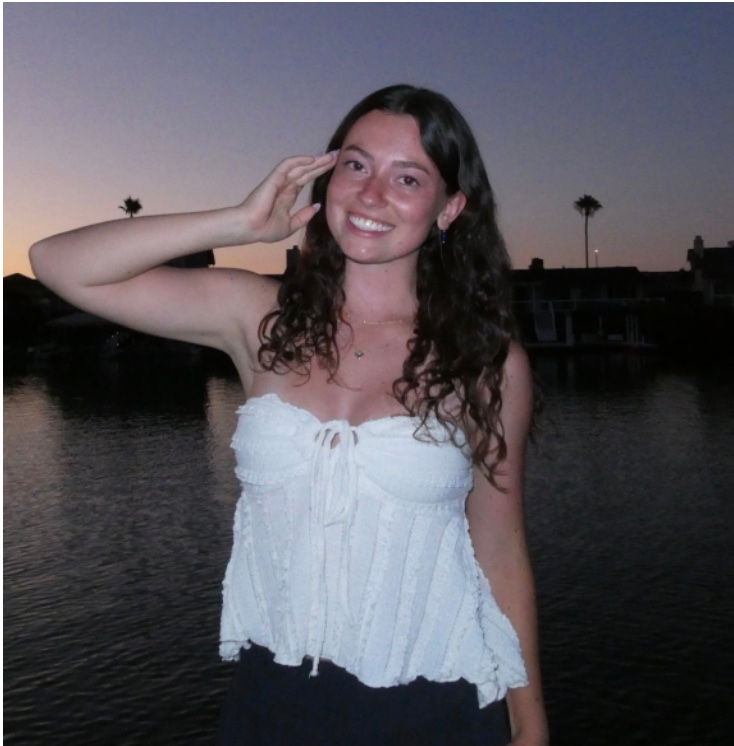
“My name is Alesha Wootten, and I am a first year business and economics major. As treasurer, I plan on managing the budget in an efficient and timely manner so it is always up to date. I enjoy budgeting and financial planning, and I hope to apply this knowledge in the Student Senate during the 2026-27 school year. Additionally, serving as a Senator at Large on the ASCC this past year has given me the experience and skills to effectively advocate for students. I am committed to helping students have a positive community college experience by increasing awareness of the opportunities, resources, and support programs offered on campus. I am very passionate about serving on the Student Senate, and I will always prioritize the needs of the student body.”
Wootten is currently a Senator-at-Large for the ASCC. She was elected in spring 2025.
Health and Wellness Ambassador Candidate:
Sofia Grigg
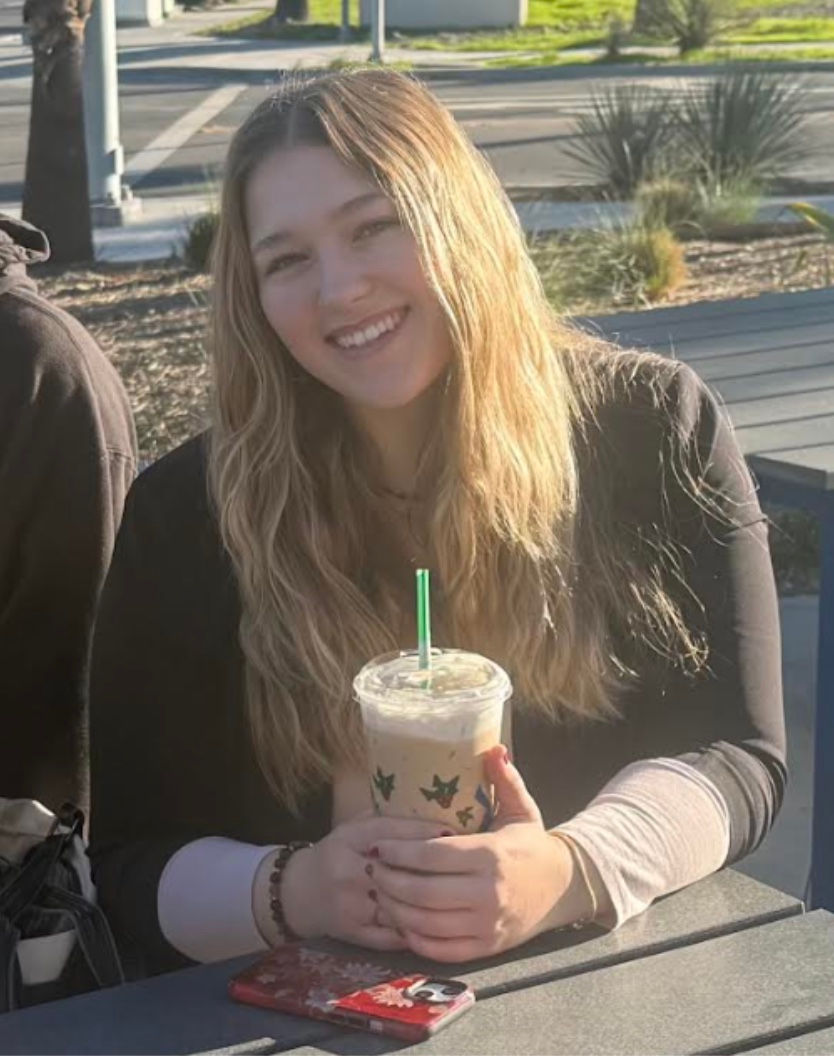
“Hi! My name is Sofia Grigg, and I’m nominating myself to run for the Health and Wellness Ambassador position for the 2026 to 2027 term. As a first-generation college student, I understand the struggle of navigating higher education, and I make it a goal to prioritize accessible resources and strong, student-led advocacy. This past year, I have had the opportunity to serve on the Student Senate, and by doing so, I have gained the meaningful experience needed to best advocate for students. While this experience has prepared me for this role, I am always looking for new ways to support students by sharing campus resources, voicing student opinions, and encouraging collaboration among campus organizations. Through volunteering and working as a PEERS Wellness Ambassador for Cabrillo Student Health Services, I have been able to effectively express my passion for mental health advocacy and ensure that students receive the support and equal representation they deserve. Thank you for your time and consideration.”
Sofia Grigg has been Health & Wellness Ambassador since February. She was elected to the role of Senator-at-Large in spring 2025.
Current senators who do not intend to return to the student senate in the fall are President Vivianna Moreno, Treasurer Róise O’Connor, Legislative Representative Angela Caparas, and Senator-at-Large George Little.
When asked if the lack of candidates for executive positions poses a problem, Little explained that this isn’t the first time there hasn’t been a candidate for the top positions.
“Our President in the 2024-2025 term, Mia Nachazelova, had originally been elected as Vice President, and the person who had been elected as President had to step down before her term began due to a class conflict, so she stepped into that vacancy. Vivi Moreno, then a Senator-at-Large, stepped into the Vice President vacancy after about a month, and then went on to become the President this year,” Little explained.
Voting closes May 1. Students may vote using a Google Form on the ASCC website. The Elections Committee will meet May 7 to review and finalize the results. Election winners will be announced via social media, campus communication, senate communications, and the monthly Board of Trustees meeting.
–Isabella Blevins
Club Feature:
SACNAS
Society for the Advancement of Chicanos and Native Americans in Science (SACNAS) is the parent organization for the Cabrillo club SACNAS. The program was started in 1972 by a team of Chicano and Native American STEM Scientists and Doctors with the goal of creating a predoctoral Graduate Fellowship Program for Chicano and Native American students. Today, it stands as a nationwide student success program offering resources, community, and support systems for Chicano and Native American STEM students. SACNAS at Cabrillo has established themselves as a peer support and community building group. The club frequently organizes speaker events and field trips with the goal of inspiring and uplifting Cabrillo students. On May 4 and 5 at 1pm they are hosting a free market in the MSC where students can bring books, clothes and other items to exchange, meet new people and build community. If you are interested in joining, meetings are hosted every Monday at 2:30pm in Room 804.
The Scene
Highlighting Cabrillo’s Music Department
Spring has sprung at Cabrillo, and their music department is in full swing. Not only do many students benefit from the variety of programs offered through the VAPA division, but there are also plenty of ways for music lovers to experience the talent within these programs. In speaking to students involved, it’s clear that there are numerous opportunities held through the school that students can and should support.
Student Cat Leal, 21, spoke to me about her involvement in Cabrillo’s music program. She has been in a broad scope of productions throughout her time here. She noted some of her favorite productions as being Johann Sebastian Bach’s Mass in B. Minor with the Santa Cruz Symphony, the production of Amadeus with Santa Cruz Symphony and Santa Cruz Shakespeare, and the multimedia performance of Notebooks of Leonardo Da Vinci, which took place at Carnegie Hall in New York.
“Being a part of these ensembles has not only challenged me to grow my musicianship skills and general music knowledge, but it has been a very vital outlet for me as well,” Leal said.
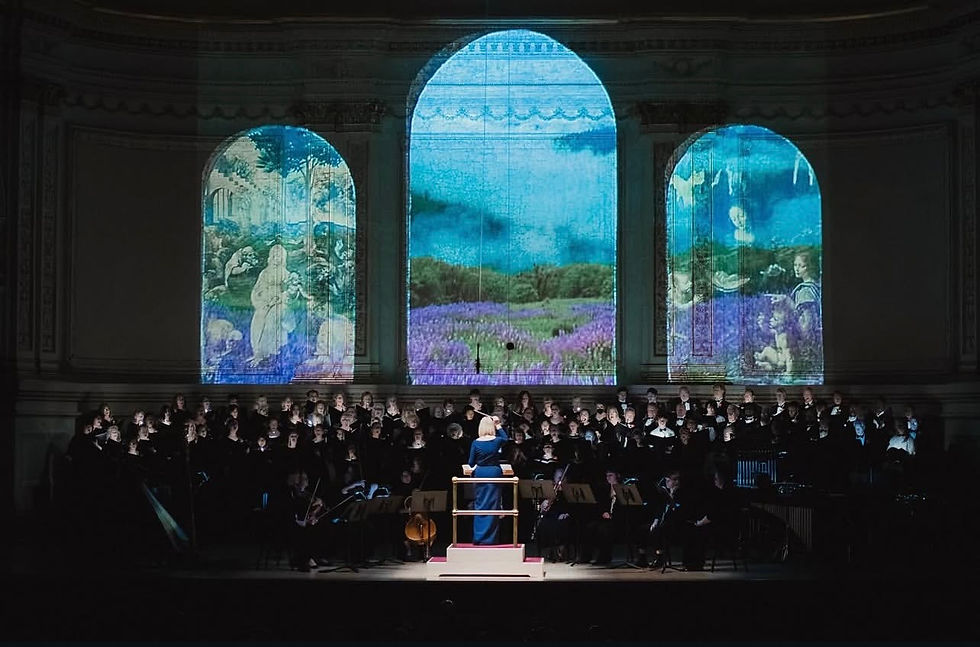
I was truly impressed at the breadth of opportunities she has had here on campus and the talent it takes to participate in such productions. Leal is not the only one, as there are a vast number of talented staff and students at Cabrillo who are keeping the arts alive.
When asked if she was participating in any

upcoming showcases, Leal exclaimed, “Yes! Cabrillo’s Symphonic Chorus has a Beethoven’s Symphony No. 9 performance next weekend, May 2 at the Civic Auditorium [in Santa Cruz], and May 3 at the Mello Center [in Watsonville]. There is also Cantiamo's concert at Samper Recital Hall on May 16! The theme is ‘Finding Home - Songs of Travel, Immigration, and Displacement.’”
If you’re looking to venture around Santa Cruz, then the Symphonic Chorus’ show is just the one for you. Or if you want to see something on the Aptos campus, then Cantiamo’s concert would be a great fit. To find ticketing information about shows on campus, or to find out about other upcoming performances, check out the VAPA page on Cabrillo’s website. This page gives the community access to a large number of events they can enjoy and support.
Supporting music on campus isn't just beneficial to our programs. Music has always been a way of uplifting ideas and voices that would otherwise not have as large a reach.
Leal says that the upcoming Cantiamo concert is “some of the most politically poignant music [she’s] had the honor of learning.”
Some other upcoming events include performances by the Latin Jazz Ensemble on May 15 in the Black Box Theater on the Aptos campus and the chorale spring concert held on May 9 in Samper Recital Hall, also on the Aptos Campus. Many more events are being held alongside these mentioned, so stay on the lookout for those on the VAPA page!
It is not just VAPA classes that provide these amazing opportunities either. Cabrillo has a strong presence of club involvement, especially with music students. MTRAC (Music Technology and Recording Arts Club) is a student-run music club. They’ve begun a series of “Comfy Couch” concerts that showcase live music performances on campus.
I went to one of these performances held this April. The experience was not only comforting, as the arts in schools are historically underfunded and underrepresented, but the pure talent I saw at this show was absolutely inspiring. After I arrived, I saw countless students and staff pour in to support. Once the music started, everyone was attentive and simply in awe of the musicianship they saw from their peers. It was incredible to see the community that the music department has created and how they utilize the VAPA buildings and clubs to uplift student music.
The music offered here on campus sticks with its participants and supporters, even after their time at the school. I spoke with an alumni student Rowan Johnson, 21, about his experiences in the music department. He credits Cabrillo with helping him transfer to UCLA’s music industry program and building his musical repertoire.
“You can't talk about the Cabrillo music program without talking about the staff first. I feel like what sets Cabrillo's music program above any other local music program–or not even local, statewide–is how incredible the staff are and how widely they are loved by everyone there. I think it creates such a connected environment.”
This connected environment is a great strength of the music department here. There are a variety of ways to show up for the department and experience all that it has to offer. Supporting events through the school continues to keep these programs thriving while simultaneously aiding students in their growth as musicians.
–Lizzy Sterling
Whereabouts
Welcome back to Whereabouts! This month, we will be taking a look at a couple of coastal locations that I recommend visiting as a way to kick off your summer break. Starting slightly north of Santa Cruz, Wilder Ranch State Park features a picturesque beach. Directly behind the beach, is a natural cave, the entrance to which is covered with ferns. Next, in a quiet neighborhood of Capitola, there is a small park, beach, and surfbreak with an incredible view of Monterey Bay (fog permitting). Lastly, at the end of this month, following finals and graduation, a group beach-day will take place at one of the featured beaches.
Fern Grotto Beach, Wilder Ranch State Park (California State Parks) - Santa Cruz
Fern Grotto Beach lies within Wilder Ranch State Park (1401 Coast Rd, Santa Cruz, CA 95060). Wilder Ranch is located just north of the City of Santa Cruz, along Highway 1. To get there from the Cabrillo College area, head north on highway one for 9.5 miles until you see the state park on your left hand side. With no traffic, it should take roughly 20 minutes. As far as parking goes, one is required to pay a fee ($10) to park inside Wilder Ranch State Park. However, near the entrance of Wilder Ranch, free parking is available along the dirt shoulder of Highway 1 (ocean side). But parking here does mean one must walk a short distance to get to the park.
From the main parking/bathroom area, go towards the railroad tracks and start down the Old Cove Landing Trail. This trail will bring you to an overlook of Wilder Beach. Keep following the trail along the scenic coastal bluffs and soon you will find Fern Grotto Beach. This beach is easily identifiable by the obvious trails that lead down to the sand. Furthermore, at the back of the cove is a large sandstone cliff face that has ferns growing on it. At the base of the cliff is the entrance to the cave.
This beach has a secluded, rugged feel due to it being surrounded by sandstone cliffs. The sand is an excellent place to sun bathe, have a picnic, or crack open a book. If you are in for an adventure, I recommend checking out the cave too. While easily accessible, exercise caution when exploring the mouth of the cave. There are many slippery rocks and pieces of driftwood scattered on the ground. As for the cave itself, I recommend admiring it from a distance and refraining from venturing in. If you so choose, it is possible to mountain bike to Fern Grotto Beach. On a slightly different note, keep in mind that dogs are not allowed anywhere in Wilder Ranch State Park.
As for the history of the area, after Spanish colonization in the late 1700s, much of the land that now makes up Wilder Ranch was used for farming and ranching. Private farms still exist on the land today. The Fern Grotto Beach itself remains fairly untouched and will most likely remain that way for years to come.
Both seabirds and coastal bluff birds can be observed in and around Fern Grotto Beach. On the hike (or bike ride) there, keep your eye out for ground squirrels and rabbits. In the late spring through summer, humpback whales can be seen breaching offshore. These are just some of the different species present in this area.
(information gathered from California State Parks)
Privates Beach, Opal Cliffs County Park (Santa Cruz County Parks) - Santa Cruz
For a slightly different vibe, check out Privates Beach on Opal Cliff Drive in Capitola. This beach is extremely easy to find. From Cabrillo College, take Park Avenue towards Capitola. Turn left onto Monterey Avenue towards Capitola Village, then take a right onto Capitola Avenue. At the four-way stop sign, take another left onto Stockton Avenue (which turns into Cliff Drive). Keep going until the three-way stop sign and take a left onto Opal Cliff Drive. Continue straight. Soon, on your left hand side, you will see the small parking area for Opal Cliffs County Park and Privates Beach. Parking is free in these stalls. If every space is taken, you are permitted to park on the street nearby. After parking, walk directly through the black gate. That is it! You made it to the park and beach.

The Opal Cliffs park is small but quaint. There are a few benches, some bike racks, and trash receptacles. Check out two of the overlooks or keep walking down the path towards the beach. Descend the wooden stairs, scramble down the sand and mudstone outcrops, and find a spot on the inviting sand. Depending on where the tide and swell is at, there can be an ample amount of space on the beach, or barely any. I recommend checking to see when low tide is prior to visiting this beach. If you surf, Privates is also a well-known break. On calmer days, it is more than beginner friendly.
Lastly, it is worth mentioning that Privates used to be a closed park/beach, only accessible by paying for a key to unlock the gate. If you do choose to visit, keep an eye out for seabirds, sealions, seals, and tidepool critters.
(information gathered from County of Santa Cruz & California Beaches)
Group Beach Day!
A group beach-day will take place at Privates Beach on Opal Cliffs Drive on Sunday, May 24 from 2-4pm. Bring sunscreen, water, and maybe even a surfboard!
–Rocco Arnott
ASCC Report
On April 2, Vice President of Student Services, Blanca Baltazar-Sabbah announced to the Student Senate that the Cabrillo College Promise Grant was cut by 40%, thus Cabrillo will discontinue offering all local high school graduates free tuition for their first 2 years at Cabrillo. Cabrillo will continue to honor the promised grants to current students but will be prioritizing low-income and FAFSA eligible students moving forward; read more in Isabella Blevins’ article. The Senate decided to gift the graduating class of 2026 canteen water bottles and table at Student Health Service’s Mental Health Conference on May 7 from 11:00-3:00pm.
At the April 9 Student Senate meeting, the senators shared how their Second Harvest Food Bank volunteering went. They also went over the success of the Spring Carnival events, adding that those were the last student life/ICC events of the semester. Student Life Director Alta Northcutt shared about Cabrillo’s Just Report It program and explained when issues should be reported to Title IX and when they should be reported to the Student Support and Care Team. Students may visit Cabrillo Just Report It for more information.
At their April 16 meeting, the Senators decided to gift water bottles and t-shirts to this spring’s graduating class. However, they have yet to settle on a t-shirt design. The student senate voted to reject the proposed t-shirt design because it was created using A.I.
On April 23, the senators continued their planning of the graduation ceremony proceedings. They voted to purchase 400 water bottles for the graduating class. Student Life Director Alta Northcutt informed the senators that the ceremony will feature a mariachi band and an African drummer. They also spent time planning their own end-of-year celebration at the Sesnon House.
At the April 30 meeting, the senate discussed the idea of consistently holding or sponsoring events that celebrate the cultural heritage months that occur during the academic year. In doing this, the senate aims to properly represent each group. Arturo Ocampo from Ocampo Law gave a presentation on ICE Response Training.
General Assembly Report from 4/16 meeting:
At the end of March, senators Vivianna Moreno, Jaime Hernandez-Villamar, Melanie Camacho-Estevez, Alesha Wootten, George Little, and Angela Caparas attended the SSCCC (Student Senate for California Community Colleges) General Assembly in Burlingame. At the assembly, Cabrillo’s resolution to implement a Student Development Leadership Council (SDLC) model across the state passed successfully. This leadership model is similar to the one currently used at Cabrillo. According to Caparas, the resolution is expected to be on next year’s agenda for discussion with the Chancellor’s Office. More about this can be found in Caparas’ report.
While at General Assembly, the senators also participated in various workshops and voted on various resolutions presented to this. For more information, check out the participating senators’ individual reports in the 4/16 meeting minutes.
Hidden Gems: The Cabrillo Theater Arts Program
~student-contributed article~
It is said that studying theater and drama helps students in their relationships with others in their communities that they will form beyond graduation. People often choose theater arts and drama because they are going into theater, film, television, teaching, or even law. Other careers include acting, theater lighting, costume design, scene painting, and television production.
Background about the theaters at Cabrillo College is important to understand its place in this college community and how it has grown.
A theater was part of the initial plans for Cabrillo College to help enrich the community. The first space for theater was the 200 building. Then, they moved to the Crocker Theater, which has two theater spaces. The smaller stage is called the Black Box Theater, where smaller performances take place. The Black Box stage has a multi-form audience configuration, meaning that the audience area can be manipulated so the stage can be anywhere in the audience that the director wants it to be.
The current Theater Arts Director is Skip Epperson who has taught at Cabrillo for 35 years.
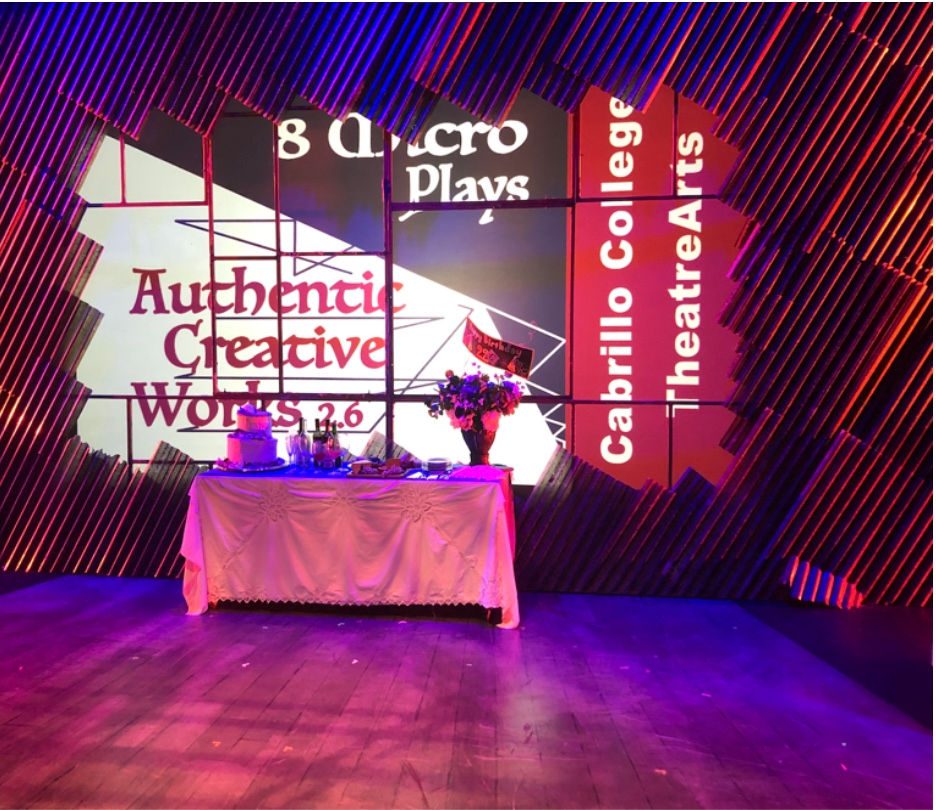
In the 1980s, a man named Lile Cruse wanted to create a special summer program for actors. Thus, the Cabrillo Stage was born through Cabrillo’s Summer Rep Program. The program was a demanding experience, with three minor plays and one major musical in the season. Famous actors like Vivian Vance, John Carradine, Sylvia Sydney, and Jim Hutton starred in Cruse’s shows. In the 70s, Proposition 13 almost did away with the entire program. However, Cabrillo instated Cruse as the Performing Arts Division Chair so that he could build something similar to the Summer Rep Program into the college’s curriculum.
The shows that Cruse produced were wonderfully successful. Over the following years, Sweeney Todd, The King and I, Oliver!, The Sound of Music, Funny Girl, Annie, and Peter Pan were put on. The Cabrillo Stage became renowned for having must-see summer shows. After a critically acclaimed run of West Side Story, Cruse retired.
Famous Cabrillo Theater Arts alumni include: Denise Crosby, daughter of Bing Crosby, Cameryn Manheim, who is most known for Law and Order, Ricky Tripp, who is currently a choreographer in New York, and Charlie Smith who worked as a set assistant for the set designer of Jersey Boys.
Today, there is a lot going on in the Theater Arts program. Sister Act will be performed over the summer. It will run from July 10 to August 2.
Epperson, the Theater Arts Department Chair, very kindly agreed to an interview with me and provided a lot of the fun facts in this article. He also invited me to see the Authentic Creative Works 2.6., a program consisting of 8 micro-plays , written, directed, and performed by students. I enjoyed all the performances immensely.
My family and I have always gone to the theater and my sister and I performed in many plays growing up. Although I am not involved currently, I have had extensive musical and regular theater experience. Writing this article inspired me to get involved in theater again. I’m currently looking at what is being offered this summer. Cabrillo theater is inspiring! I invite you to check out what is going on.
–Elle Hughes
Thanks for reading!
We'll see you next fall!
For updates follow our Instagram: @the_cabrillo_scuttle


Comments