April Issue

Updated: Apr 30
Cabrillo is entering the final stretch of the spring semester. With graduation and summer break on the horizon, students continue to push themselves through midterms--and soon, finals. Perhaps as a form of "spring cleaning," some organizations across campus are making strides to move forward from institutional harm, while others are failing. This month, The Scuttle started a new initiative to connect with students by conducting interviews on the streets. Throughout our issue, read different women's perspectives on the importance of Women's History Month and what it means to them.
Isabella Blevins' articles on renaming 'César Chávez Day' to 'Farmworkers Rights Day' and the continuing efforts of the NASSSC in reworking the college's land acknowledgment spotlight the positive endeavors of the college in doing our part to make amends to historical wrongs and dismantle systemic oppression. Although many members of the Cabrillo community put their best foot forward when taking accountability, some struggle. Read my article on how our Governing Board of Trustees disappointed the Cabrillo community by choosing to stay silent in the face of ignorant racism.
But for those wanting a taste of summer, read The Scene, where Lizzy Sterling provides insider tips on how to navigate the college music scene, including how to find local house shows and the best low-key music venues. Similarly, Rocco Arnott ups the difficulty in Whereabouts. This month, Arnott highlights some more challenging hikes in Nisene Marks and Henry Cowell State Park. Additionally, read about Cabrillo's local inspiration, chemistry professor, and first woman to surf Mavericks, Sarah Gerhardt.
If you or anyone you know would like to get involved with The Scuttle, we are currently hiring writers for the 2026-27 Academic year. Check out our Google Form for detailed job descriptions and applications. As always, students are encouraged to submit writing, editorials, poetry, and art to be featured in our issues. Feel free to reach out to jofahey@cabrillo.edu or isblevins@cabrillo.edu with any questions or inquiries.
-Josephine Fahey
Upcoming Events
Spring Carnival

Join the Student Senate for their annual Spring Carnival! Hang out with Cabrillo clubs, play games, win prizes, and enjoy free food and music. Head over to the VIC Plaza (by the cafeteria) on the Aptos Campus from 11:00-3pm on April 1st, and at the Watsonville Campus Breezeway from 11:00-3pm on April 8th to celebrate spring!
Cabrillo Honors Research Symposium
The Honors Transfer Club is hosting its second annual research symposium, open to all Cabrillo students, on April 23rd from 4-7pm, in Room 456. If you are a student who has done research for a class, internship, or personal pursuits, you can submit your work by April 19th to present in front of peers, instructors, and staff. For more information, check out the Honors Transfer Club's Instagram page.
The Bookworm Club's Masquerade Gala & Open Mic

On April 16th at 4pm in Horticulture Room 5005, The Bookworms English Club is hosting their 3rd semesterly Open Mic! Come elegantly dressed in your favorite gowns, suits, and masks, for an evening of student performances, music, and food! Please RSVP using the Google form and provide your Student ID at the door.
Spring Fresh Markets
Every month, the NEST sponsors Fresh Markets for all Cabrillo students to pick up free fresh produce and pantry goods. Students may also receive assistance in completing CalFresh applications. Bring your own grocery bags!
Aptos Library Plaza
Aptos Library Plaza
Monday, April 13, 9:30 a.m. – 11:00 a.m.
Monday, April 27, 9:30 a.m. – 11:00 a.m.
Watsonville NEST (Classroom A140)
Wednesday, April 1, 11:00 a.m. – 12:30 p.m.
Wednesday, April 15, 11:00 a.m. – 12:30 p.m.
Wednesday, April 29, 11:00 a.m. – 12:30 p.m.
Native Plant Sale & Spring Festival
On Saturday, April 11th, from 9am-11am, outside of the Horticulture building, Cabrillo's Horticulture Department will be hosting a Spring Festival. Support students and vendors who will be selling native plants, pottery, locally-made jewelry and art, botanical books, and more!
Announcements
Student Senate Elections Open for 2026-2027 Academic Term
The Associated Students of Cabrillo College (ASCC) is the official body and voice of the Cabrillo College students. Each year in April, ASCC opens nominations for membership on the Student Senate. Nominations are open for two weeks, at which point the Elections Committee will announce candidate forums (when applicable) and begin the voting process. The ASCC Student Senate invites members of the student body to apply for the 2026-27 Student Senate. Applications are open now and can be found on the Senate webpage, the Senate, and club socials. Paper copies are available at the Student Senate offices in both Aptos and Watsonville. Learn how to be a leader, work closely with mentors, and engage with fellow students. Applications are open from April 6th-20th. For more information, visit the ASCC webpage.
Cabrillo Orientation Leader Applications Open
Are you passionate about making students feel welcomed and confident as they start their journey at Cabrillo College? Join our team as an Orientation Leader (OL)!
OLs serve as mentors, facilitators, and ambassadors for the Cabrillo community. OLs help guide incoming students through New Student Orientation, lead small group conversations, introduce campus resources, provide campus tours, and create a supportive and fun environment for Seahawks and their families.
If you enjoy connecting with people, working as part of a team, and representing Cabrillo College, we would love to have you apply!
Position highlights:
Paid student position: $17/hour
Leadership and professional development opportunities
Exclusive Cabrillo OL apparel
Application Deadline: April 2, 2026
If selected, the interviews will take place on 4/7, 4/8/ or 4/9 in-person at the Aptos campus.
For any questions, please contact Darlene Maciel (damaciel@cabrillo.edu), Kimberly Leyva (kileyva@cabrillo.edu), or Matt Hopkins (mshopkin@cabrillo.edu).
Drop-In Office Hours with Dr. Devin Walker | Every Tuesday
Have you ever wondered what the Division of Student Equity and Success (DSES) does, or just curious about student equity as a whole? Do you have an equity concern?
Join Dr. Devin Walker for open office hours every Tuesday, 12pm-2pm in The Multicultural Student Center (SAC132).

Native American Support Committee Continues Discussion Surrounding New Cabrillo Land Acknowledgement
Following up on conversations that began earlier this semester, the Native American Studies & Student Support Committee (NASSSC) continued to discuss the importance of the college implementing a new land acknowledgement at their March 18 meeting in the Multicultural Student Center at the Aptos campus.
The NASSSC is a campus organization dedicated to advocating for indigenous people and students within our community and promoting indigenous studies at Cabrillo College.
The committee recently received approval from College President Jenn Capps and the board of trustees to write a new land acknowledgement. The committee’s goal has remained the same since they began this process: to create a statement that sincerely recognizes and honors the indigenous peoples of past and present from the regions Cabrillo College occupies, as well as the land itself, all of which is not accomplished by the current land acknowledgement. They underscored that achieving this goal also means holding numerous discussions with a variety of people from the college and the wider community to ensure that the new land acknowledgement is truly inclusive and the result of a group effort.
“This group is not doing this in a performative way, or a checking-a-box way, or a ‘we want to be woke’ way. We are doing this in a way because what has been done is not okay,” said committee member Leah Resendez, committee member and College Readiness & Dual Enrollment Coordinator.
Cabrillo governing board member Christian Cuevas, who played a role in the development of the current land acknowledgement back in 2020 and 2021, said the college worked with UCSC and an Amah Mutsun leader, but the statement only covers the land occupied by the Aptos campus.
“It needs to cover the whole district,” Cuevas said.
She expressed support for the placeholder land acknowledgement on the homepage of the NASSSC website and remarked that Cabrillo should remove its land acknowledgement from its website for the time being, until the new one is finished.
Micaela Johnson, committee member and Admissions & Records Analyst at Cabrillo, believes this situation affects students and others on campus more than they might think.
“Lots of students, faculty, and staff have no idea they have indigenous roots...Students are trying to figure themselves out. I think that’s part of this.”
The group expressed gratitude for Capps’s support of the revision. Capps has experience in tribal relations from her previous position as Vice President of Academic Affairs at Cal Poly Humboldt.
In a statement provided to The Scuttle on this matter, Capps said: “In Humboldt, I did a lot of work with Tribal leaders as Cal Poly Humboldt was in the service area for 13 Federally recognized Tribal Nations, as well as many others that aren't federally recognized…I hope to use the lessons I learned in that deeply meaningful work to lead us forward at Cabrillo College.”
Johnson said she was glad to learn about Capps' history of working with tribes.
“She has her finger on the pulse,” she said.
There is, however, some uncertainty surrounding how the college will approach indigenous consultations and who will ultimately be included in the land acknowledgement revision process.
Next steps will include working with local tribes and the indigenous community, but the college first needs guidance on how to consult and work with these groups. The NASSSC said it had been recommended that the college reach out to Redbud Resource Group–a Santa Rosa based organization that provides training and resources for academic institutions and other organizations to build respectful and effective relationships with tribes.
The college may also explore the possibility of forming a smaller group dedicated to workshopping the new land acknowledgement–an idea that was met with skepticism from some committee members.
Cabrillo Native Outreach Coordinator Jesse Malley pointed out that funneling the land acknowledgement revision through a small group would likely exclude voices and input.
“I don’t want to participate in exacerbating local native tensions by siphoning it all through [a single person],” she said.
The common sentiment was that the NASSSC members don’t want the indigenous community to feel left out of a conversation that directly impacts them–especially because that’s what happened when the current land acknowledgement was written.
“I fear that sometimes, as an institution, Cabrillo may get ahead of itself in feeling very good about being progressive in certain aspects, but we are still very far behind the forefront of change. We are certainly not change makers as far as academic institutions go; we’re not setting a precedent on anything,” Malley said.
The NASSSC made it clear that they do not wish to move through this process quickly. Right now, they are exploring their resources and evaluating other examples of land acknowledgements that they may be able to take inspiration from.
“We want to do this correctly, not just haphazardly," Leah Resendez said.
–Isabella Blevins
Why is Women’s History Month important to you?

–Micaela Johnson
Admissions and Records Analyst
Native American Studies & Student Support Committee
Cabrillo’s Board of Trustees Struggles to Take Accountability
These past few months, the Cabrillo Board of Trustees has been caught in a whirlwind of escalating conflicts. Cabrillo Administration has been navigating how to manage a series of racially ignorant comments and retorts made by Area IV Trustee Steve Trujillo. Furthermore, faculty, staff, and students alike are disheartened and ashamed by the rest of the Board's ineptitude at confronting the harmful comments of Trustee Trujillo.
At the February 9th, 2026, Board of Trustees Meeting, a resolution reaffirming the college's commitment to black equity and support during Black History Month was presented to the board. The board members took turns emphasizing the importance of the resolution, and some commended the college’s Umoja Program for its work in black student support and equity.
Trustee Trujillo used his turn to talk about President Donald Trump's racist post on the social media site Truth Social, which depicted Former President Barack Obama and Former First Lady Michelle Obama as monkeys. Trujillo said he was “appalled” by the President’s actions, then said “I immediately thought of Travaris”, singling out the Vice President of Instruction, Dr. Travaris Harris, who is African American, and asked if he had any opinions about the post. Dr. Harris said he didn’t and thanked the board for the resolution, and Board Chair Donna Zeil moved on.
Days later, an anonymous email circulated between the Board, Administration, and adjacent staff, demanding a formal public address and apology from the Board, as well as a statement “outlining steps the board will take to prevent racially targeted conduct in the future” and “a review of trustee conduct standards and accountability measures”. The email called out how Trujillo’s comment “placed a black campus leader in the position of being singled out publicly in connection with racist imagery” and that it was not an isolated incident. This email was also published in Lookout Santa Cruz as a Letter to the Editor. None of these demands were met during the month of February.
Many constituent groups of Cabrillo caught wind of what happened at the board meeting and took time to express their disappointment, including the Faculty Senate, the Student Senate, and the College Planning Committee. These groups mainly pointed out the blatant ignorance of Trustee Trujillo’s comment and how it was a tokenization of the black administrator. Many were also frustrated by the Board's inaction during the incident, highlighting that none of the Board members spoke out when the harmful comments were made.
For the remainder of February, there were no public comments or addresses on the subject made by the Board or the College President. On March 2nd, at the following board meeting, the situation escalated.
The first action item on the March agenda was for the addition of an interruption statement to the Board norms, which reads, “We commit to addressing harmful moments in real-time, acknowledging that impact matters more than intent.”
The motion passed unanimously with no contest. During the discussion portion of the item, the Board members agreed that this addition to their board norms would help prevent instances in which someone is hurt due to ignorance and hold each other accountable. Many Board members also acknowledged that while they did not believe that Trustees Trujillo intended to hurt Dr. Harris or the black community with his words, he did so nonetheless.
Later in the meeting, the Board voted on establishing an Ad Hoc committee to investigate formal complaints about a board member. The board member under investigation was not specified, but the motion passed with all Board members voting in favor, except for Trustee Trujillo’s abstention. Trustee Donna Zeil and Ken Wagman will lead the Committee. Trustee Zeil says the committee “will report out, probably, by next [Board of Trustees] meeting,” on April 6th.
During constituent group reports, the Student Senate, Faculty Senate, and Classified Employees Union utilized their time to condemn the Board for its inaction during such a critical moment. Jasmine Northcutt, Administrative Assistant to the Dean of Student Services and part of the Classified Employees Union, delivered powerful statements identifying all the ways that the Board did not put their leadership skills to use.
Northcutt read, “There is nothing professional about letting someone cause harm openly, then allowing them to be corrected privately. Your training, your title, your degree, your experience mean nothing if all you ever do is talk about it.”
Similarly, Faculty Senate President Victoria Bañales stressed that “leadership carries a responsibility to model cultural awareness and inclusive practices.” Bañales also emphasized how a recent Campus Climate Survey found that black employees felt unsupported by the college, suggesting that the incident may have perpetuated this notion. The faculty Senate requested that the board “engage in meaningful cultural sensitivity and anti-bias training.”
Following constituent reports, Board members used their reporting time to address the incident. Trustee Zeil and Trustee Adam Spickler shared similar sentiments, expressing their regret for not speaking up and pledging to do better. Many of the board members again reiterated that they don’t believe Trustee Trujillo intended to cause harm.
Trustee Francisco Estrada said, “I failed… last meeting to speak up. I don’t have any excuse. I know better as a person of color. I’ll be doing my best to rectify that problem.”
Alternatively, Trustee Dan Rothwell stated, “I thought Travaris handled it perfectly. And it felt like I didn’t need to respond after that… It would have come across as a white man trying to rescue a black man. I’m not willing to apologize for it because I don’t think that I was necessarily wrong.”
Last to share was Trustee Trujillo, who started his 5-minute report by briskly announcing that he had a “domestic agreement” with an African American man for 7 years, who had recently passed, explaining his absence at the January Board meeting. He then justified that his reasoning behind associating Dr. Harris with Former President Barack Obama was that they are both from Chicago. He continued to attempt to prove his innocence by sharing that his mother had domestically abused him as a child, and that he had been verbally assaulted as a gay Latino man throughout his time serving on the board.
Trujillo said, “I will not apologize for my feelings…. Perhaps my words were not well chosen, and I do apologize for that, because that is not the kind of person I am. I have been hurt, you have no idea.”
Trustee Trujillo finished his report by declaring that his Uber was waiting for him outside and prepared to leave the meeting.
As Trujillo gathered his belongings, Vice President of Student Services, Dr. Blanca Baltazar-Sabbah, spoke out of order to remind the board of their recently added interruption statement, saying, “I believe that Trustee Trujillo just made another reference that is insulting to a black man.”
Trujillo made his way to the door, while Trustee Spickler and Interim Student Trustee Viviana Moreno urged him to take accountability for what was said, “instead of trying to walk away from the situation.”
After Trujillo left, Dean of ASCCESS Lisa Joyner expressed that, as a black woman, “it is very disheartening” to watch the Board continue to sit in silence.
Joyner said, “You all are supposed to be our leadership. You’re supposed to step up when injustices are happening. It’s very painful.”
Trustee Rothwell responded that in the past, the board had voted unanimously to censure Trustee Trujillo and that Rothwell had personally inquired about removing Trustee Trujillo from the board, but found that could only be done by a public recall vote by the members of the representative’s area.
Northcutt then added to Joyner’s statement, expressing that it is more impactful and effective as a board to discourage behavior such as Trujillo's, in the moment. She explains that simply interrupting a conversation and saying “this isn't productive” is more efficient than “justifying all the reasons we keep sitting here being abused by Steve’s comments.”
Cabrillo College President Jenn Capps shared her appreciation for those who spoke up when needed.
“I don’t wish to be performative, but authentic. We’ve got some work to do to create an environment that is free from harm,” says Capps.
After a moment of silence, Board Chair Zeil moved forward with the agenda.
On May 4th, an email was sent to Cabrillo employees by Confidential Executive Assistant to the President, Ronnette Smithcamp, on behalf of Trustee Zeil, which read, “The Cabrillo College Governing Board recognizes that certain comments have caused hurt and frustration among students and employees, especially members of our black community. The Board stands united in rejecting racist, discriminatory, or harmful comments — regardless of intent.”
On May 11th, Lookout Santa Cruz published a Letter to the Editor, written by Trujillo, titled “Let me explain myself.” The letter reiterated most of what Trujillo said during the meeting, adding that he received no formal complaints from community members despite the “controversy that followed the meeting.”
“I apologized to anyone I may have hurt with my remarks. I meant that apology sincerely,” wrote Trujillo.
In the following weeks, Cabrillo was buzzing with frustration. Those who weren’t there cautiously asked what had happened, and those who were audience members shared with dismay.
In an interview, Student Senate President and Interim Student Trustee Viviana Moreno shares how hard it was to be one of the two people to use their voice in the moment.
“All these people said, 'I wish I spoke up,' and they proceeded to do the same thing…I understand they can’t control him, but you can always control what you do in those situations, and what they chose was to stay silent and complicit.”
Moreno says that it was an awkward experience, realizing in the moment that some people “say stuff and don’t ‘do.’” Coming out of the meeting, she felt “genuinely ashamed” of the board's lack of advocacy.
As a Hispanic student, Moreno always feels fairly represented, but she now sees that not everyone feels the same way. She added, “Lisa and Jasmine had to advocate for themselves, which isn’t fair,” noting they had to speak out of turn to stand up for themselves as African Americans.
“I feel like this is not a situation that should have happened at all,” says Moreno.
Sebastien Sloan, 21, a Political Science major at Cabrillo, shared his opinion on the subject.
“In that type of scenario, shock is justifiable. But if you’re in a position of leadership, you should get your thoughts together and call it out. Otherwise, you're doing what a lot of other leaders of our state and country do, which is sit there and not use your voice. Which I feel like can be more dangerous,” says Sloan.
Sloan believes that Trujillo's comments were not made with malicious intent, but accountability should have been the correct response. He also commented on the lack of transparency between the Cabrillo Administration and students.
“We have posters around. I know when the Catalyst is having concerts, I’d like to know when the Board meeting is happening.”
Sloan had many questions, like “How are meetings conducted?” “Why doesn't it seem like the community is being listened to?” “How do I find out who my representative is?” and “How does a trustee get impeached?”
Like Sloan, many students feel left in the dark about their campus leadership. At critical times like these, when awareness is needed, the disconnect between administration and students becomes ever so clear.
In an article in Lookout Santa Cruz, Communications Professor Sky Gentile explains how she used the incident as teaching material and allowed her students to see in real-time how leadership can fail and when communication is needed.
She writes, “They questioned whether the voices currently bending the board’s ear reflect the realities students themselves are living. For the first time, I had students asking how to find out who represents their district.
The disheartening incidents that took place at the last two board meetings sparked a wave of student interest in campus politics. Questions have been raised about the Board’s institutional effectiveness and how it will move forward, while the black community on campus continues to keep their chins up in the face of racism, despite the overwhelming amount of times it has been disrespected and ignored.
Governing Board meetings are open to the public and held on the first Monday of every month. You may submit public comment by email to Ronnette Smithcamp or fill out a public comments card at the meeting and turn it in. The next meeting will be on April 6th at Horticulture Room 5005 at 6:15pm.
-Josephine Fahey
Why should Women's History Month be celebrated?

“I think Women's History Month should be celebrated because it’s showing how far we’ve grown as a society. Coming from only recognizing men and what they have done, Women's History Month gives us the opportunity to be recognized for what we’ve contributed to society as well. It’s about recognizing that women are important too.”
-Leah Morris
Cabrillo Student
HUB student employee
Cabrillo College renames ‘César Chávez Day’ to ‘Farmworkers Rights Day’
Cabrillo College’s senior leadership team prompted the institution’s board of trustees to change César Chávez Day to ‘Farmworkers Rights Day’ following allegations against Chávez of sexual abuse and misconduct that recently surfaced.

On March 18, The New York Times began publishing a series of articles chronicling the claims made by multiple women who worked alongside Chávez and the United Farm Workers (UFW) labor union that he helped found in 1962. So far, three women have publicly alleged that Chávez sexually assaulted them. Among them is Dolores Huerta, the activist and labor leader who co-founded the UFW and frequently worked side-by-side with Chávez. The other two women, who were also involved in the UFW, alleged that Chávez had repeatedly sexually abused them since they were minors.
Although César Chávez Day is not a federal holiday, it is recognized by the state of California and is observed every year on March 31, Chávez’s birthday. California Governor Gavin Newsom and other state lawmakers have expressed support for a statewide renaming of the holiday since the allegations became public. The holiday could possibly be redesignated as ‘Farmworkers Day,’ but the name is not yet set in stone.
In an email sent to Cabrillo employees, President Jenn Capps shared that the college’s cabinet has recommended to the governing board that Cabrillo also rename its March 31 observance of the holiday. The next board meeting, however, will take place on April 6– after the holiday. Capps said the new name, ‘Farmworkers Rights Day’ will be used this March, and the board will retroactively approve the change at their April 6 meeting.
In her statement, Capps wrote: “We join the United Farm Workers and other national advocates in prioritizing the voices of those who have been unheard. By renaming this observance, we ensure that our celebrations are guided by a commitment to justice that is inclusive, safe, and representative of the community we serve.”
Capps also explained that the new name was chosen because it reflects the “collective power, dignity, and ongoing struggles of the farmworkers who feed our nation.”
The name ‘Farmworkers Rights Day’ may, however, be subject to change as the situation continues to unfold and the state navigates what to do next.
–Isabella Blevins
Cabrillo’s Own: Sarah Gerhardt
Cabrillo chemistry Professor Sarah Gerhardt (pronounced Gear-heart) has been teaching chemistry classes consecutively since 2017. For those who have taken her class, you may have heard her modestly comment that she is the first woman to surf California's most famous wave, Mavericks. But despite her incredibly full life, Professor Gerhardt comes to class humbly devoted to her students, ready to teach and learn.
Just a few miles north of Half Moon Bay, this world-renowned surf spot is known for its winter swells of 25-60 foot waves. Before Gerhardt paddled out on a cold February day in 1999, Mavericks had been a male surfer dominated spot. Despite economic and gender barriers, Gerhardt’s commitment to her passions led her to breach the cold Californian waters as a triumph. Her determination and success in both her athletic and academic careers make her an inspirational local hero.
Gerhardt was a curious child and loved being surrounded by nature, and has lived by the coast most of her life. Her early childhood was spent mostly on the beach on the Big Island of Hawai‘i. Her parents would take her camping often, and she even worked as a docent, teaching people about the nature she was so familiar with. As a child with A.D.H.D. and Asthma, spending time in nature and the ocean balanced Gerhardt's sprightly desire to be active and was a great place for her “to just feel free.”
She was naturally drawn to the ocean, but didn’t start surfing until she moved to San Luis Obispo when she was 13. Gerhardt was the only surfer in her family and was self-taught, borrowing her friend's surfboard and wetsuit before deciding she wanted more from surfing. For a while, when she didn’t have the means to drive herself, Gerhardt would ride the bus with her surfboard under her arm, just to get an extra session in. Gerhardt spent her teenage years surfing shortboards and taking care of her quadriplegic mother in San Luis Obispo, and traveling to Hawai‘i to visit her father.
Gerhardt says she was often the only girl in many of her social spheres.
“I feel fortunate that it doesn’t bother me. I was so used to being one of the only women in surfing. So I would be the only one in the water, or the only woman at the table with all the boys, or the only woman in the car going to surf.”
Gender barriers never stopped Gerhardt. She recalled being interviewed by a classmate for her high school's newspaper at 15, and stating that she wanted to pursue a Ph.D. in chemistry and teach at a college. Years later, she says her strong passion for chemistry helped her succeed in such a difficult major.
“I just found so much joy and excitement learning about science. Whether it was out in nature as a child, or in my introductory science class in middle school, or my chemistry class in high school.”
Once Gerhardt turned 18, she spent a lot of time chasing waves all over California and Hawai‘i. She continued to make friends who inspired her to surf bigger waves throughout her college years. As her surfing skills developed, Gerhardt would soon receive sponsorships and travel to surf competitively. She spent time living with other surfers in sponsor houses, budgeting surf trips, and hitchhiking to airports and surf breaks. As she continued to immerse herself in the world of competitive surfing, she came across a challenge.
Gerhardt explained the inequities of pursuing a surfing career, especially as a woman at that time.
“The girls who were pursuing surfing as a profession often had to pay out of pocket. They did not have the same support from their sponsors. They didn’t have the same prize money in the contest. They had to buy their own tickets. It was very hard.”
Balancing college and her surfing career was difficult. Gerhardt said she would take quarters at Cal Poly San Luis Obispo intermittently, which ultimately slowed the process of getting her degree in Chemistry. But her ardor for the dueling aspects of her life was enough motivation to persist.
“Surfing and science were competing for my time, and so I split the difference and tried to do both.”
As Gerhardt entered her Ph.D program at UC Santa Cruz, studying quantum mechanics, her surfing career slowed down. She participated in competitions selectively, traveling to Fiji, Peru, and Bali when her schedule permitted. But Gerhardt still had the ambition and firepower needed to surf Mavericks. Sarah Gerhardt had just been married to her husband, Mike Gerhardt, and halfway through the first year of her Ph.D., when a good friend and professional big wave surfer, Jay Moriarty, called the newlywed couple up to surf the infamous Mavericks.
Gerhardt said her prior surfing experiences, mentorships, and training in Hawai‘i prepared her for the intensity of Mavericks.
“I had already been surfing Sunset Beach and outer reefs on Oahu, which are equivalent, and coming from California, I could handle the cold water.”
But Gerhardt said, “It was a lot heavier than I expected.”
She had attempted 2 times to surf the wave and failed, but on her 3rd time, she was golden.

Gerhardt used the Santa Cruz Beach Boardwalk’s Giant Dipper as an anecdote to big wave surfing.
“Just imagine that feeling you get, and the anticipation of ‘Oh, I’m strapped in, I can’t get out now.’ The nerves, heart rate, and the sympathetic nervous system kicking in. And when the rollercoaster is going, and that's when you drop in…. There's a lot of ‘oh shit, oh shit, oh shit,’ paddling into a wave and looking down at 20-30 feet of water before it starts to jack up, knowing you have to get up immediately.”
Gerhardt also described it as “very focused”. Saying she wasn’t worried about laundry or homework.
“That’s something I really appreciate about big wave surfing… it brings me to this moment, right here, right now.”
Gerhardt continued to surf Mavericks every season, only taking breaks when her two children were born and recently due to the demands of her teaching career. Even so, Gerhardt equivocally pushes herself in her academia and teaching career.
After completing her Ph.D studying nanoparticles, Gerhardt started teaching at Cabrillo in 2009. She pivoted to working in pharmaceuticals for a year, but realized she wanted to return to education. She moved away from material science, wanting to study the living body, and entered a post-doc program in molecular biology. Gerhardt soon after got a full-time job at Monterey Peninsula College, which she enjoyed, but didn’t prefer the commute with young children at home. She returned to Cabrillo College in 2017, and after 9 years of teaching chemistry at Cabrillo College, she is currently on sabbatical, learning Spanish and developing more comprehensive and equitable learning materials for her chemistry students. Gerhardt is also an active member of the American Chemical Society and the Climate Justice Universities Union.
Gerhardt’s love for teaching is palpable. Being in the classroom allows her to explore pedagogy and how to break down science to make it conceptually digestible for students.
She says, “It’s a different type of learning.” Gerhardt explains how fascinating it is to learn something new and have it be reflected by students. When it comes to her classes, she strives to inspire students through exploring different student learning styles and equity practices.
“My students were awesome. I told them that. I’m like, you're the reason I’m happy to come to work today.”
During the tough parts of her life, Gerhardt used health and wellness as a way to stay grounded. She stressed how demanding STEM careers are and that being able to prioritize wellness empowered her to continue studying a difficult subject. She utilized the resources around her when struggling with mental or physical health.
“I couldn’t do this without having help from other people. And I hope that students will recognize that we have to do this together.”
Gerhardt encourages others to explore an intentional focus on the dimensions of wellness, especially in a time with so much “noise and distraction.”
Ultimately, for Gerhardt, surfing and science were balancing forces for each other. She explains that her curiosity tethers both and allows her to explore both passions further than one typically would. Her love and capacity to fulfill those aspects of her life are what permitted her to succeed in both.
“It brought my focus to the front. Like a mirror. It’s like who am I? What do I value? What matters?”
-Josephine Fahey
Club Spotlight
Seahawk Cinema Club
The Seahawk Cinema Club is a gathering space where students can enjoy watching a new film each week. After each movie, the club openly discusses the movie, looking at analytical and social contexts, and how it resonates with viewers. The watchlist is organized by themes, like a well-constructed playlist. A past theme has been “War on Film”; the club has so far watched Dr. Strangelove (1964), The Day the Earth Stood Still (1951), and Nausicaä of the Valley of the Wind (1984). Their next theme will dive into “History Through Animation”. The club will be watching Persepolis (2007) and The Breadwinner (2017). The club is also a space for creative collaboration and idea sharing, with the goal of making short films outside of the club’s meetings. Join the Seahawk Cinema Club every Thursday from 1pm-3pm in Room 454!
The Scene
Navigating Cabrillo’s Student-Led Music Scene
The DIY music movement has always existed among college students. In Santa Cruz specifically, Cabrillo students have played an integral role in fostering this type of underground music scene. DIY music is all about community, more specifically, helping each other spread and create music. Most student musicians don’t have the means for managers, labels, or booking agents, meaning they foster this music environment themselves, driven by their own passions for music. The culture is inclusive and cutting-edge, with a core purpose being to make music accessible to everyone.
For many Cabrillo students, venues such as Subrosa, The Catalyst, The Crepe Place, Felton Music Hall, and Shanty Shack are common places to go to see local acts or even perform their own music. That's just to name a few, as there are even more places beginning to host live music. For instance, Santa Cruz Recording, a local recording studio, has begun hosting live streams and in-person music events. Redwood Records, another local business, has even converted the back part of their shop into a space for smaller, intimate shows. All of these spots are great places for students here at Cabrillo to explore the world of live music.

As you become more immersed in local music, you begin to see how each band and venue offers a unique experience. For instance, the venue Subrosa typically hosts college bands and smaller touring acts. They center themselves around being an anarchist space that advocates progressive thinking and is open to a wide variety of genres. Then there are spaces like The Catalyst, which hosts anything from smaller local bands to large touring acts. The unique nature of each local band and venue is why the music available to Cabrillo students is so amazing. If you look for it, there is truly something for everyone.
Many students also go to, and help organize, local house shows: a type of concert where everything from tickets, band lineup, and set up is organized primarily by students with the support of each other and community members. These types of shows are particularly popular for students, especially within the alternative and emo genres. For these events, students band together to make their backyards and houses working venues. It takes a lot of preparation, but students are happy to do it nonetheless. Some help with flyers, some bring gear, and others play the music. Most importantly, others come to support. They typically feel like something straight out of a movie with nontraditional spaces, makeshift gear, and some of the most innovative music out there.
It can be intimidating at first, trying to figure out how to become involved in local shows. In speaking with musician and Cabrillo student Andrea Urzua, she says many students “stay in the loop by following their favorite bands on different social media platforms. They stay informed on upcoming shows, music releases, and tours.”
She continued, “Bands and musicians are always posting their upcoming shows and promoting them online ahead of time in hopes of a good turnout.”
Social media is one of the primary ways students stay in touch with the current state of music around campus. Following bands and venues on social media opens the door to seeing many more artists and events. Aside from social media, checking the websites of the venues mentioned above, or even going in to ask about upcoming events, can put you in touch with music in the area. Continuing conversations with friends and supporting local music keeps the scene here thriving.
In that same discussion with Andrea, I asked about her personal connection to the student music scene at Cabrillo.
“Since I was in the music program at Cabrillo, the vast majority of students in that program were in bands or forming their own creative projects. The majority of my friends in Santa Cruz are musicians, and almost all of them are in bands. The whole music community is basically friends with each other, which is a beautiful thing.”
In my time playing in bands here, I found that sentiment to be true. As I have gone to and played more local shows, I realized how tight-knit the collective music community here is. We live in a unique area that blends a smaller town feel with a groundbreaking musical sound. Most local bands know each other and are always in communication about planning shows or starting new projects. The byproduct of this is incredible new music and an ever-growing number of live music events.
It is important to note that this experience is not exclusive to students in the area. Music around Cabrillo is inclusive of all musicians and music goers, with a strong foundation being the students who run it. It is even well integrated with neighboring schools, with Andrea describing the backbone of the music scene as “a good mix of UCSC and Cabrillo students.”
Simply looking into some local bands or checking out a couple of venues can introduce students to a whole new world of music. The strong presence of DIY music in Santa Cruz is incredible because it is an art form in itself. Everything from flyer design to event planning to the music itself is always unique. There is something here for everyone, which is why it is so important for Cabrillo students to continue to support local music.
-Lizzy Sterling
What does Women's History Month mean to you?
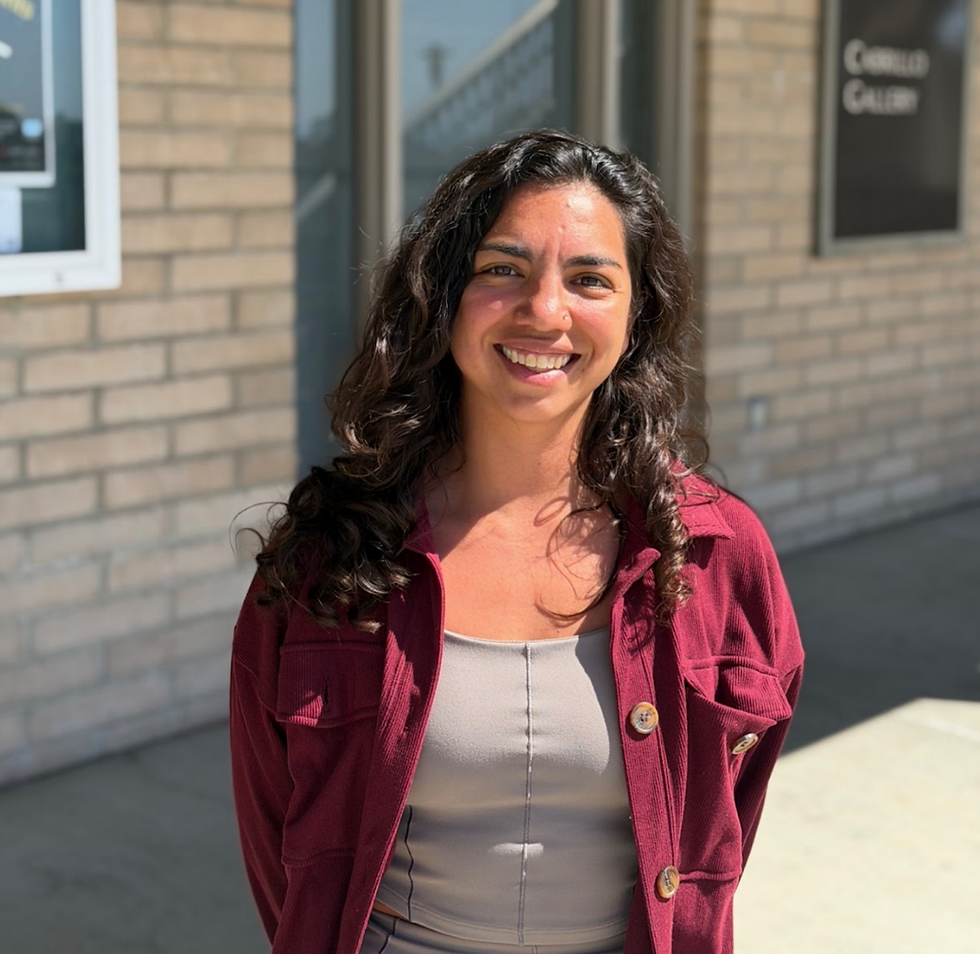
“To me, [Women’s History Month] is not a celebration. It is a reminder of the inequalities that have existed and still exist [for] women...It doesn’t matter the race or ethnicity…It is [a way] to empower women…and remind us that we have achieved a lot and that we’re still strong and we can help each other out. It's also important to [understand] that there’s still a lot that needs to be achieved in terms of salaries, inequalities, rights, violence against women, and a lot more.”
–Mara
Cabrillo College student
Psychology major
Whereabouts
Welcome back to Whereabouts! This month we will be taking a look at two California state parks in Santa Cruz County. Both state parks have gorgeous, natural water features and are easy to access. First, in the Forest of Nisene Marks, wander among new growth redwoods and rest beside gentle creeks. At the Fall Creek unit of Henry Cowell, track down historic lime kilns and overgrown waterfalls.
The Forest of Nisene Marks (California State Parks) - Aptos

The Forest of Nisene Marks is easily accessible from Cabrillo College. In fact, it is possible to walk into the park from campus via the Carmichael and Vienna Woods trails. To do so, I recommend parking in parking structure P. From the upper entrance of the structure, walk straight across Perimeter Road, and you will see a trailhead nestled within the trees. This is the beginning of the Carmichael trail. Follow it for a little over half a mile, and it will spit you out at Kamian Way and Danube Drive. Take a left on Danube and walk straight until you see the Vienna Woods trailhead on your right-hand side. From there, follow the Vienna Woods trail into Nisene Marks State Park.
If you already have a parking pass for Cabrillo College, or are able to take the bus, accessing Nisene Marks is free. But one can also drive into the park by heading east on Soquel Drive toward Aptos Village. At the intersection with Aptos Creek Road, take a left and follow the road into Nisene Marks (Aptos Creek Road, Aptos, CA 95003). However, if you choose to drive into the park, there is a $8 vehicle day-use fee, unless you have a California state parks pass.
This relatively unknown state park is a favorite among community members for hiking, dog walking, and mountain biking. Nisene Marks has multiple bathrooms, several parking areas, and plenty of picnic/park benches. Currently, camping is not permitted at the West Ridge Trail Camp (as of March 2026). Dogs (leashed) and horses are allowed on the trails below the steel bridge. Two spots that I recommend in the Forest of Nisene Marks are Maple Falls (6-11 miles depending on the route) and Sand Point overlook (11-15 miles). While both destinations require a trek, they are extremely worth it.

On a slightly different note, from 1883 to 1923, the Forest of Nisene Marks area was clear cut for wood. Then the land was acquired by a family from Salinas in the 1950s and was eventually donated to the state in 1963. The park was named after a mother from the family. Almost every redwood in the state park is new growth.
As for its ecology, the forest is home to coastal redwoods, raccoons, mountain lions, frogs, deer, banana slugs, and more. These species thrive in the slew of habitats found in the park. Some of the habitats include riparian forests, grasslands, and woodlands. Lastly, rare, native fish species, such as coho salmon and steelhead trout, spawn in Aptos creek.
(information gathered from California State Parks)

Fall Creek Unit of Henry Cowell (California State Parks) - Felton
The Fall Creek Unit of Henry Cowell State Park is located at 860 Felton Empire Rd, Felton, CA 95018. To get there from the Cabrillo College area, head north on Highway 1 until you hit the River Street/Highway 9 intersection. Take a right to merge onto Highway 9. Keep driving up the scenic roadway. Eventually, you will reach Felton. At the intersection with Felton Empire Road and Graham Hill Road, take a left on Felton Empire Road. A little ways up Felton Empire, you’ll find the parking lot for Fall Creek on your right-hand side. Parking is free at this part of Henry Cowell State Park! However, the small lot does fill up fast, so be sure to get there early; especially on weekends and holidays.
Fall Creek offers almost 20 miles of trails to explore. The area is predominantly covered with coastal redwoods and features a couple of creeks too. Mountain biking and dogs are not permitted. There are also no restrooms. As you can tell, this section of Henry Cowell is pretty bare bones when compared to the main park. However, the beauty of this whimsical watershed makes up for the absence of amenities. A couple of notable features include a few abandoned lime kilns and several small, yet charming, waterfalls.

The abandoned lime kilns found in Fall Creek are from the bygone days of limestone mining. During the precipice of the demand for lime, these kilns (and a few others dotted around Santa Cruz County) greatly contributed to the manufacturing of building materials. Redwood was the main source of fuel for the massive kilns. The kilns were closed in 1919 after concerns of deforestation grew.
Some notable species that can be observed in the Fall Creek Unit of Henry Cowell State Park include mountain lions, bobcats, banana slugs, deer, and birds of prey. The main habitat present is riparian forest.
(information gathered from California State Parks and the Mountain Parks Foundation)
Group Hike
A group hike at the Fall Creek Unit of Henry Cowell State Park will take place on Wednesday, April 29 at 4pm. Be sure to bring water, light snacks, and hiking shoes. The hike will start at the parking lot trailhead (off of Felton Empire Road) and will survey portions of Fall Creek trail and South Fork trail (Fall Creek and lime kilns– 2.2 miles total).
-Rocco Arnott
Hidden Gems: Pino Alto, Our Own Student-Run Restaurant
When they bought the house in 1858 and fixed it up to be a summer home in 1911, the Sesnon family would never have believed that their home would become the bustling restaurant it is today. Although Pino Alto used to be where Cabrillo’s cafeteria is now located, it has thrived in its new home, the Sesnon House. This hidden gem of a restaurant is special because it gives students a real-world kitchen and front-of-house experience through Cabrillo’s Culinary Arts and Hospitality Management Program (CAHM).
In an interview, Jeremy MacVeigh, faculty member and Pino Alto Instructor/ Mentor of the CAHM, said that the restaurant was good because it was a public-facing business. Through the restaurant, students are offered three main classes, ranging in difficulty: lunch, dinner (more advanced), and catering.
The teachers who instruct the students come from a variety of backgrounds. Department Chair and Chef Andrea Mollanauer owned a catering business before teaching. Chef Britton Thompson, another full-time faculty member, worked in casinos and hotels before becoming a teacher. CAHM faculty member and Pino Alto Instructor/ Mentor MacVeigh said that students could go into a range of careers, such as catering, casinos, hotels, and private chefs. MacVeigh’s journey started when he was 15 and worked at a fancy retirement community where they served dishes like lobster and filet mignon. Later in his career, MacVeigh spent 10 years working at different restaurants. He went to school for Food Science and ended up working for Sara Lee for a year before making the conscious decision to teach. Over the next couple of years, MacVeigh taught at a few private schools like Professional Culinary Institute and International Culinary Center.
The main goal of the CAHM is to help students reach their goals in the culinary and hospitality fields. When my family and I went to Pino Alto for dinner, for example, our waitress, Gigi, said that she wanted to be a private chef and own her own catering business.
The catering program at Cabrillo requires 16-19 credits to earn an Entry-Level Catering Certificate. The baking program allows for more creativity while teaching students about the business side of it as well. CAHM offers a 16-credit Entry Level Baking Certificate of Achievement. Students get to use professional equipment only found within the world of baking, as well as hands-on baking labs and theory lectures. Students leave with a well-versed baking education and ready to take on a career in the baking arts.
When I walked into Pino Alto for dinner, I was greeted by the smile of a student hostess who happily showed us to our table. Then we were served water by one of the student servers, Michael. Interestingly enough, he had also been the one to make the bread on our table. The bread was called Bastones de Aceite and it was delicious. The spread served with it was called Romesco, which is a traditional Spanish collection of herbs. The bread had a focaccia-like texture and the spread had a little bit of a spiciness to it. Compliments to Michael because the bread was very tasty! Our waitress, Gigi, was personable and efficient. She never kept us waiting an exorbitant amount of time between meals. We started with Tabla de Embutilos y Quesos. It was delicious! I loved the 12-month Serrano Ham, both cheeses (Manchego and Mahon), and the Cured Spanish Chorizo. I am not partial to olives so I did not eat those, and the Chestnut Jam was good, it just did not appeal to me. For the appetizer, my favorite was probably the Cured Spanish Chorizo. It was kind of spicy with a juicy kick at the end that I liked. Everything together really was quite delicious!
In between meals, Gigi brought us Intermezzos. However, the first small plate of food that was brought to us was not an Intermezzo, it was a lemon shrimp on top of a smooth tortilla-like, circular flatbread. It was an Amuse Bouche. I liked this one because even though I usually do not like shrimp, the lemon cancelled out the fishy texture and taste. Then we had an Intermezzo, which was gelato. It was passionfruit and was sweet and gentle. For our entrées, my mum’s boyfriend and I had the Franco Peri Peri. The is a Classic Portuguese recipe that consists of grilled chili-marinated chicken with roasted potatoes, grilled red bell peppers and a spiced piri piri sauce. It was great and not too spicy either! My mum had the Paella De Verduras and loved it. It had Bomba rice Paella with Saffron, tomato, peppers, green beans, green peas, artichokes, and butter beans. Next, we all had the Grapefruit Intermezzo. It was a little bit too tart but it was still good. It definitely cleansed my palate. For dessert, my mum’s boyfriend and I split the Tarta de Santiago. The almond cake was delicious and the housemade ice cream was divine. I really enjoyed dessert.
Overall, the meal was delicious. I would recommend this restaurant to anyone looking for a nice and calm place to eat. The dress code was smart casual. Also, Pino Alto changes their menus every three weeks, so chances are you probably will not eat the same meal twice. I give this restaurant 4/5 stars.
Starting April 2nd, for the next three weeks, they are doing a Japanese inspired menu. Its price is fixed at $70 per guest. 4 courses- Amuse Bouche-Onigiri-Intermezzos included. A reservation is strongly recommended.
For anyone looking for a culinary arts program, Cabrillo’s is experiential and very comprehensive. Both the CAHM program and its restaurant are hidden gems!
-Elle Hughes
ASCC Report
In an effort to keep the student body informed and educated, The Scuttle and the Associated Students of Cabrillo College (ASCC) have initiated a collaboration that aims to strengthen the bond between students and the executive functions of Cabrillo College.
Associated Students of Cabrillo College meetings are held every Thursday from 3:30-5pm. The meetings are usually held at the Aptos campus in SAC East room 225. Meetings on the third Thursday of each month are held at the Watsonville Center in room A150 (The Watsonville meeting schedule has been updated for the spring 2026 semester–check the ASCC webpage for more info). Student Senate meetings are open to all students, and attending is a great way to stay informed about important decisions and events that impact your life as a Cabrillo student. The Scuttle publishes information from each meeting that is the most relevant and important to students, but we encourage students to attend senate meetings themselves.
On March 5, the student senators held their first meeting of the month. At that meeting, they approved the college’s updated mission statement with emphasized terms highlighted. The senators also voted in a new Student Trustee, The Scuttle’s very own Josephine Fahey! She will serve in this role for the remainder of the semester, following the resignation of former student trustee, Grace Goodhue, who left the position last month for personal reasons.
At the March 12 meeting, Treasurer Róise O’Connor presented a concern on behalf of multiple students who approached her about the competency of Cabrillo’s counseling services. Students are reportedly frustrated with the advising (or lack thereof) received from counselors. Lisa Joyner, Dean of ACCESS, was present at the meeting and said she could discuss this issue with the senators at a future meeting since it is within her department. The senators also approved a date, April 4, to volunteer together at Second Harvest Food Bank.
At the last meeting of the month, Chair Vivianna Moreno informed senators that the college may declare March 31 “Farmworkers Rights Day” in lieu of the sexual assault allegations against civil rights activist César Chávez. Watsonville Representative Melanie Camacho-Estevez reported on the ongoing expansion efforts for Watsonville, including 1-2 credit class options for high school students, a new Watsonville campus logo, and partnerships with local restaurants to provide discounted prices on food for Cabrillo students. The senate also prepared for the annual Student Senates of California Community Colleges General Assembly by reviewing resolutions. The Senate also discussed possible solutions for preventing heat stroke at this year’s graduation ceremony, including overhead shade structures and misting fans for the graduate seating area.
The Scuttle is Hiring

Want to become involved in student journalism, gain paid writing experience, and get your writing published?
The Scuttle is hiring Editors/Journalists and Columnists for the 2026-2027 academic school year. To apply, fill out this Google Form, and our editors will reach out promptly.
Editors/Journalists contribute 2000-3000 words monthly on various topics regarding student life and culture, politics, and happenings, and put together the digital issue each month.
Columnists contribute 700-1000 words monthly on a topic or interest of their choice. Columns are meant to be an equally informative and entertaining read.
Student Submissions
The Scuttle encourages editorial submissions from students about anything relevant to Cabrillo, students, or current events. Get your opinions published! Additionally, send us your poetry, short stories, photography, and artwork, and we'll feature it in our issues. Fill out our Google Form to submit.
Thank you for reading The Scuttle and for your continued support of student journalism.
Be on the lookout for our next issue, our May 1st!
In the meantime, follow our Instagram to stay updated on campus happenings. @the_cabrillo_student_scuttle


Comments